

Caregiving in the US 2025: Deep, and Sometimes Surprising, Insights about the Family Caregivers in the United States Today
AARP’s Caregiving in the US 2025 provides a comprehensive research report on the evolving landscape of family caregiving. As professional eldercare professionals, we at Sage recognize the invaluable role that family caregivers play throughout America today.
The 2025 statistics alone are remarkable:
- 63 million American adults provided ongoing care to adults or children with medical conditions or disabilities.
- That represents almost one-quarter of adults in the United States.
- Over the past 10 years, the number of family caregivers has increased by more than 45%.
- America’s family caregivers are 61% women, with an average age of 51. Nearly half are under 50, which is younger than many expect.
The above numbers attest to the reality that family caregiving provides a critical foundation for our health care system, especially for older adults. Here is an infographic that highlights the study’s key statistics.
This blog highlights key findings from the detailed Caregiving in the US 2025 report.
Sandwich Generation Family Caregivers
The AARP study on family caregivers highlights what it means to be part of the Sandwich Generation.
Nearly one-third (29%) of all caregivers belong to the so-called sandwich generation. These are parents with a child under 18 at home who also care for an adult with disabilities or complex medical conditions.
An increasing share of caregivers under 50—47%—is now in this dual role of sandwich-generation caregiving. Additionally, some children in caregiving households also provide care. Approximately 4 million children under 18 assist their families in caring for adults. There’s no doubt that dual caregiving—raising children and caring for aging parents—can be tough. Balancing careers, kids, and elderly parents is a heavy load of responsibility.
What Are the Main Health Conditions of These Care Recipients?
The results of Caregiving in the US 2025 reveal that family caregivers often care for older adults with memory issues.
When surveyed, family caregivers reported that the main condition or illness of their care recipients, age-related decline, and Alzheimer’s or some form of dementia were reported most frequently.
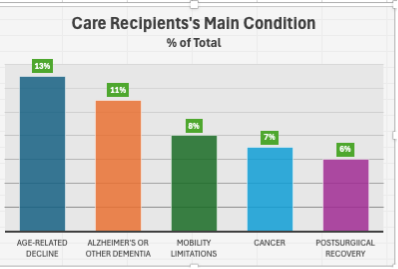
Adding secondary conditions to the primary ones increases reported cognitive issues. Twenty-seven percent of caregivers say their care recipient has Alzheimer’s, dementia, or another memory-related problem. Notably, 17 percent of caregivers report they are “not sure” whether their care recipient has a memory issue. This high percentage highlights an opportunity to improve clinical detection.
Family Caregivers: Are Some Paid?
Three findings stand out to profile the payment status of family caregivers.
- Most family caregivers provide unpaid care.
Out of the 63 million family caregivers, the majority — 81% — are not paid for their caregiving work. Only 11.2 million family caregivers reported receiving payment for care in 2025. Most of these caregivers provided both unpaid and paid care, meaning they were paid for only some of the hours they worked. Just 3% are solely paid family caregivers.
- Most family caregivers turn to others for unpaid help, which sometimes involves children in the household.
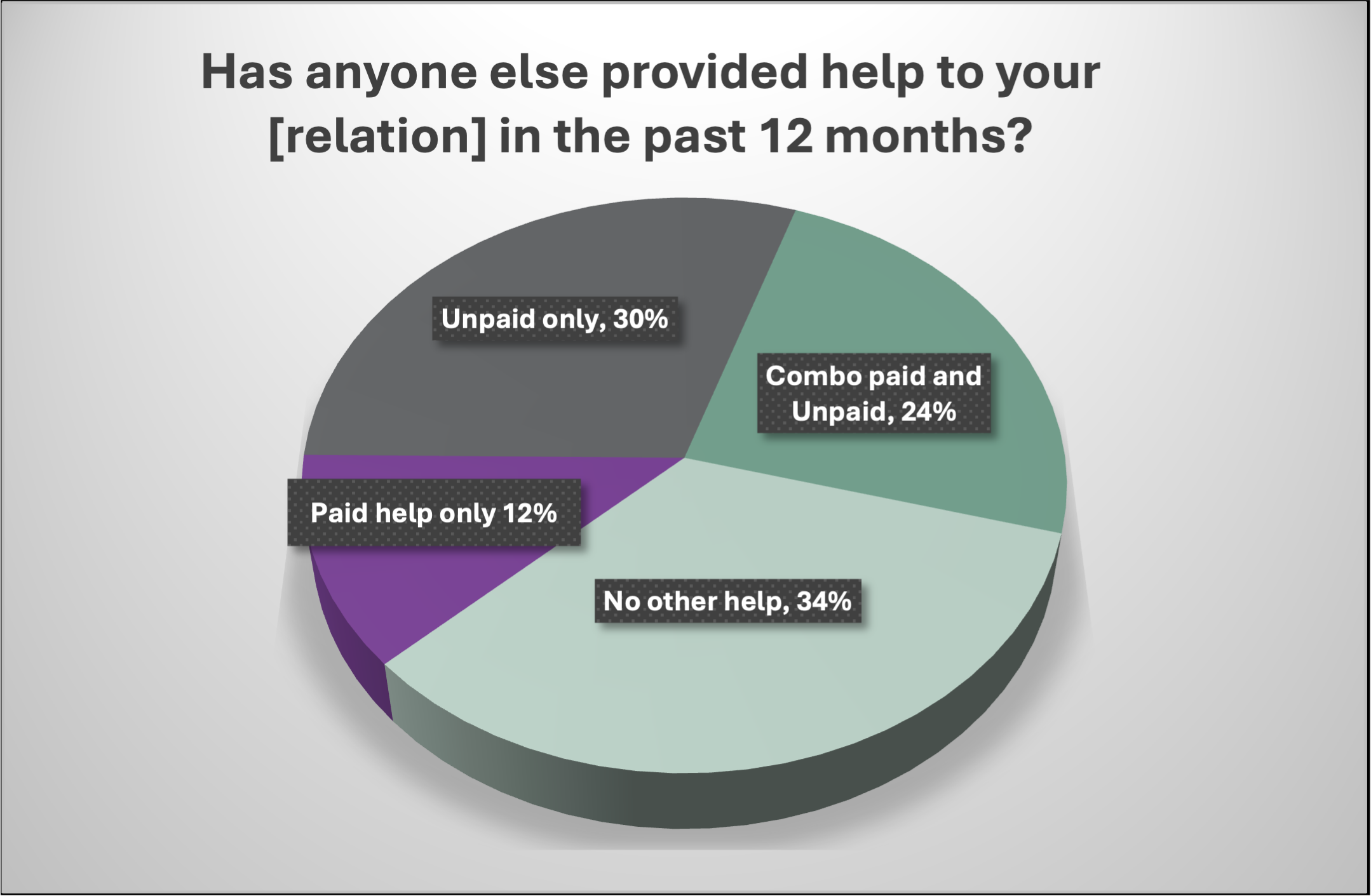
It is not surprising that caregivers seek outside help. The chart below highlights the caregivers’ support network.
- Twelve percent hired paid help.
- 30% brought in unpaid help, and
- 24% relied on a mix of paid and unpaid assistance.
- One-third (34%) had no other help.
Unpaid caregiving can be a family responsibility. The AARP report estimates that among the 31 million adult caregivers providing unpaid help, 4 million children under 18 in those households are caring for an adult recipient.
- Turning to short-term care is rare.
Use of respite care—short-term relief for caregivers—remains very low. Although 39 percent of caregivers say respite care would help, only 13 percent actually seek it. Barriers such as a lack of trust, shame, or concerns about the quality of care deter family caregivers from hiring the respite care they desire and need.
What’s Involved for Family Caregivers: Duration of Care and the Daily Tasks
The data from AARP’s Caregiving in the U.S. paint a picture of the essential yet often unnoticed work of family caregivers.
A family caregiver’s role often lasts longer than many realize. The average duration of caregiving is 5.5 years. Nearly 30% of caregivers have provided support for 5 years or more, up from 24% in 2015.
You might wonder, “What tasks do caregivers perform?” The answer:
- 65% Help with Activities of Daily Living (ADLs)
- 99% Help with Instrumental Activities of Daily Living (IADLs)
- 55% Help with Medical and Nursing Tasks
Although it is common for caregivers to assist with ADLs and IADLs, they rarely receive formal training for this vital support. Only 11 percent report getting any training or preparation for ADLs, IADLs, or behavioral management and modification. When it comes to medical and nursing tasks, 22 percent of family caregivers have received training, mainly from medical professionals and personal contacts. With this training, nearly all (96 percent) felt it prepared them well to manage these responsibilities.
This highlights the importance of proper training and preparation for complex tasks. With training for the necessary daily tasks, improve caregivers’ success and confidence.
Caregivers’ Role with Health Care Providers
Caregiving in the U.S. highlights the vital role family caregivers play in managing their care recipient’s health care. Coordinating with health care providers is another common responsibility. Specifically:
- 70% monitor the severity of the care recipient’s health conditions.
- 64% communicate with healthcare professionals caring for care recipients.
- 58% advocate on behalf of care recipients with providers, community services, or government agencies.
Certain caregiver groups are more likely to assist with care coordination tasks, including female, African American/Black, and AANHPI caregivers. Younger caregivers communicate less often with healthcare professionals and do not advocate for their care recipients.
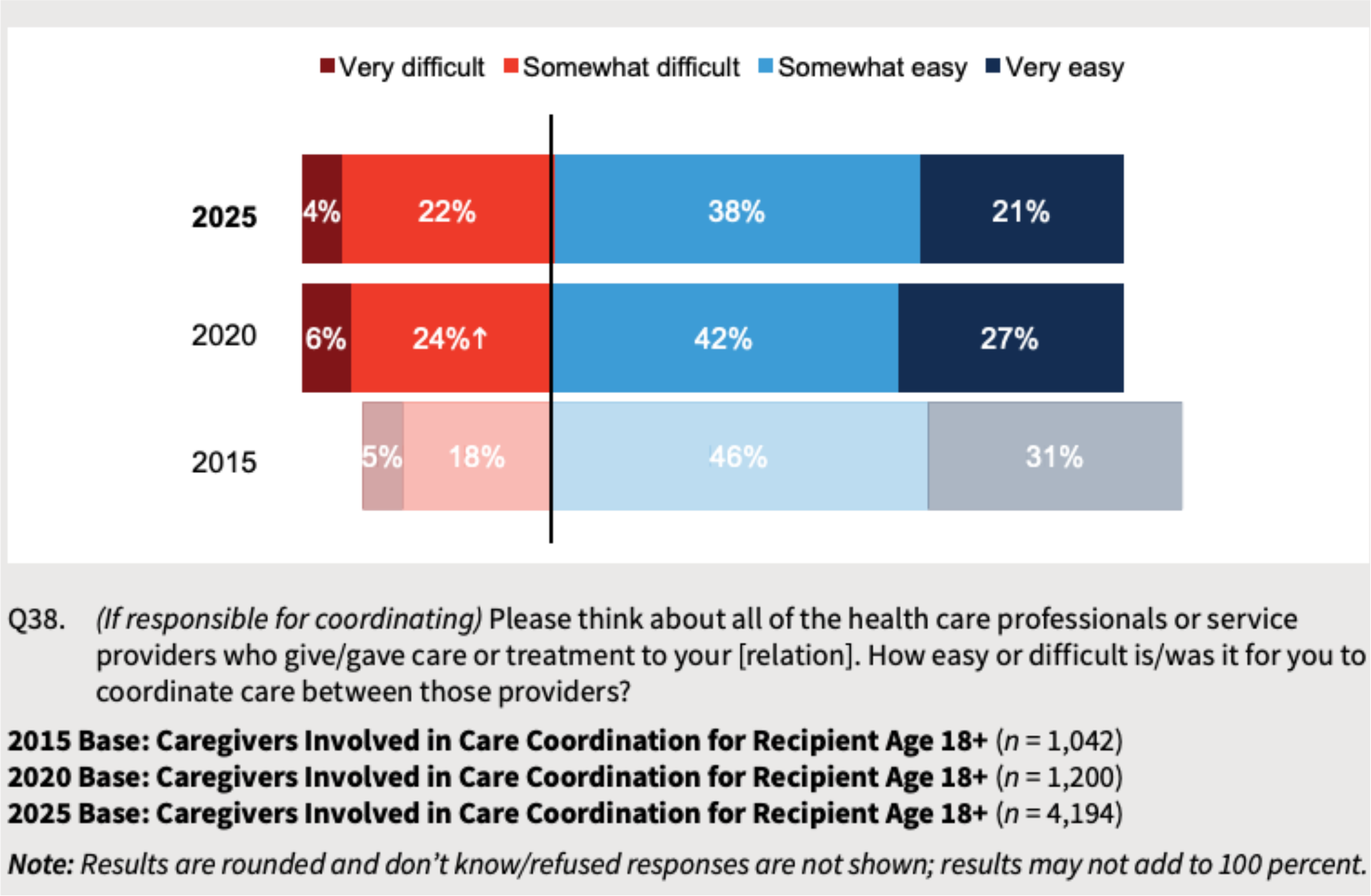
Care coordination remains a challenge for many family caregivers. Below is the chart from the AARP report. Only 6 in 10 report that coordinating care with health professionals is easy (59%), marking a downward trend from 2015, when 77% found the task very or somewhat easy. One in three AANHPI caregivers (34 percent) report difficulty coordinating care for their care recipient, which is seven percentage points higher than the overall caregiver average.
At Sage Eldercare Solutions, we recognize the challenges family caregivers face when coordinating care with healthcare providers. Sage Care Managers also play an essential role by advocating for our clients and serving as liaisons with healthcare professionals – and we appreciate the effort involved.
Working while caregiving – balancing work and caregiving
AARP’s recent study, Caregiving in the U.S., finds that seven out of ten working-age (ages 18 to 64) caregivers are employed. These caregivers work an average of 36 hours per week.
Balancing the demands of paid work and caregiving often requires careful management of time, energy, and resources, which can affect both caregivers’ financial stability and their ability to provide quality care. Many working caregivers report negative effects from their caregiving responsibilities.
- 56% experience interference with their work, such as arriving late, leaving early, or taking time off for caregiving.
- 25% often feel isolated.
- Financial impacts include taking on more debt (22 percent), depleting short-term savings (31 percent), and leaving bills unpaid or paying them late (19 percent). Others report accumulating additional debt, delaying retirement, or even facing housing instability.
The study revealed a reality that will be a surprise to many:
Most caregivers hesitate to disclose their role—only 49 percent report that their supervisor knows they are a caregiver.
In the face of these significant short-term and long-term challenges for all caregivers, especially those who work, we at Sage acknowledge and honor the dedicated, selfless efforts of family caregivers.
The Sense of Purpose That Caregiving Provides
We conclude our summary of Caregiving in the US: 2025 with an uplifting finding.
Without a doubt, family caregivers face challenges in fulfilling their caregiving roles. Yet, there is gratitude.
Caregivers show resilience and derive meaning in caregiving.
More than half of caregivers say their role gives them a sense of purpose, and this feeling is even stronger among Hispanic/Latino caregivers, lower-income caregivers, and those caring for nonrelatives.
How Sage Can Help
We at Sage Eldercare Solutions acknowledge and honor families whose dedication and hard work are vital to caregiving. We recognize the commitment of millions of family caregivers who take on the responsibility of hands-on care for a loved one.
Our practice was founded almost 25 years ago to assist families in navigating difficult decisions and transitions related to aging or chronic health issues. Sage professionals are here to address many eldercare challenges that family caregivers often face – whether by guiding them through caregiving decisions and options or by providing personalized home care to help keep loved ones safe, healthy, and living with purpose at home. Interested in finding out about Sage Home Care? Click here.
If you know someone balancing family caregiving responsibilities who could benefit from Sage Eldercare Solutions’ expertise in handling eldercare challenges, please contact us for a free consultation. Sage can provide the necessary respite care and additional support. We are here to offer wise care guidance, extraordinary care, and joyful moments. Schedule a free consultation here.