
Reimagining Wellness for Older Adults: The Seven Domains of Wellness Framework
August is Wellness Month, making it the perfect time to explore how we can enhance the lives of older adults through a holistic approach to well-being.
In eldercare, we often focus on managing illness and addressing limitations. But what if we shifted our perspective to celebrate strengths, foster connections, and nurture the whole person? The Seven Domains of Wellness framework offers a revolutionary approach to enhancing quality of life (QOL) for older adults that goes far beyond traditional medical models.
Understanding Holistic Quality of Life
Quality of life encompasses social connections, purposeful engagement, lifelong learning, and spirituality. For elders, activities and services designed to foster QOL can be particularly impactful, as they help combat the loneliness, isolation, and boredom all too often experienced by older adults.
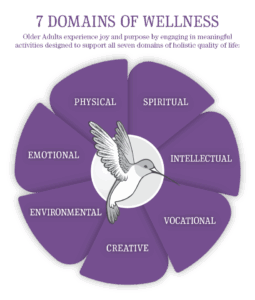
The Seven Domains of Wellness framework was developed in 1997 by Sage Eldercare Solutions as a novel framework to guide care practices in geriatric settings. The framework provides a comprehensive roadmap for delivering QOL-enhancing services. Each domain addresses different aspects of human flourishing while working together to create a holistic approach to elder wellness.
How we define quality of life is deeply personal. It’s unique to each person’s situation and the things that bring purpose and meaning to their life. When exploring QOL activities and services with older adults, including those living with dementia, be sure to keep in mind their life story, personal interests, and even old hobbies. The activities that meaningfully engage one person may not spark the same interest and joy in another. Importantly, lifestyle factors have become increasingly significant considerations for people living with dementia (PLWD), as they can influence both the experience and progression of memory loss by enhancing resilience. Using QOL activities to impact lifestyle factors of PLWD is a great place to start.
The Seven Domains: A Comprehensive Approach
-
Physical Wellness: Movement for Body, Mind, and Spirit
Physical wellness encourages older adults to stay active while finding joy and engagement in movement. This domain expands beyond traditional exercise to include gardening, dancing, playing with grandchildren, and yard work. The emphasis isn’t on performance metrics—it’s on enjoyment, interest, and the profound connection between physical activity and overall well-being.
Research shows that physical activity provides psychological benefits and helps preserve high-level brain functioning in older adults, including improved planning, memory, and multitasking abilities. Whether it’s a themed neighborhood walk, wheelchair-accessible activities, or simple stretching routines, the goal is to promote both physical health and happiness.
-
Spiritual Wellness: Connection to Something Greater
Spirituality offers hope, meaning, and connection across past, present, and future life experiences. While some older adults find spiritual fulfillment through religious practices—such as attending services, reading scripture, or participating in devotional groups—a holistic view recognizes that spirituality can also emerge through rituals, time in nature, reminiscing, music, and interactions with animals.
For many older adults, spiritual, mental, and physical health are deeply interconnected, especially when facing health challenges. This domain acknowledges and nurtures these connections, providing pathways to deeper meaning and gratitude.
-
Intellectual Wellness: Preserving Mental Functionality Through Learning
Intellectual wellness encompasses lifelong learning, acquiring wisdom, and pursuing personal passions. Family and professional care partners should intentionally integrate intellectual stimulation into daily life, as this domain is often overlooked despite its significant benefits.
Activities might include attending lectures, participating in book clubs, mentoring, writing, or engaging in puzzles and problem-solving games. These experiences support brain adaptability and flexibility, building cognitive reserve. Cultural and intellectual experiences promote social and community engagement.
-
Vocational Wellness: Maintaining Purpose and Self-Worth
Many older adults assess the value of their lives by the contributions they make to their family and society. Vocational wellness addresses the fundamental human need to feel productive and valued. This domain connects older adults to their communities through volunteering, civic involvement, and meaningful activities that provide self-efficacy and social support.
The key is tailoring activities to individual abilities and energy levels, ensuring that older adults can engage in work that feels “interesting, helpful to others, and gives life purpose.” This empowers older adults to make informed decisions rooted in their personal values and beliefs.
-
Creative Wellness: Fostering Artistic and Imaginative Expression

Creative quality of life involves artistic and imaginative engagement that promotes expression and connection. This can include traditional arts and crafts, poetry, music, storytelling, and art appreciation. Still, it also embraces “everyday creativity”—the creative acts that occur naturally in life, such as cooking, selecting clothing, or arranging living spaces.
Gene Cohen first defined “creative aging,” identifying health benefits linked to arts participation in older adulthood. Research indicates that older adults who participate in arts-based programs experience better quality of life and maintain independence more easily. Creative activities support embodied, relational experiences that go beyond medical models, promoting inclusion and connection.
-
Environmental Wellness: Creating Harmonious Surroundings
Environmental quality of life refers to experiences of safety, accessibility, and emotional connection within one’s lived environment. Environments can be calm, stimulating, soothing, or engaging—the key is ensuring they match individual needs and preferences.
Recent research explores how built environments can support personhood and engagement, even when cognitive abilities are impaired. Interactive elements can foster storytelling and agency, while safe, inviting spaces contribute to empowerment and relational care. Simple enhancements through color, plants, meaningful décor, or personal art can transform any space.
-
Emotional Wellness: Navigating Life’s Challenges Through Connection
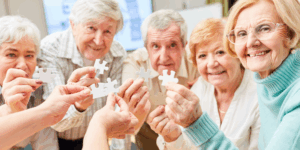
Emotional wellness helps older adults navigate the challenges of aging and illness, including dementia. Personal and professional caregivers are uniquely positioned to enhance QOL through emotional support and social interaction.
Activities that enhance emotional well-being include social outings, group participation, reminiscing, and quality time with family and friends. The goal is to ensure that older adults feel empathically connected to others in ways that nourish and uplift them, supporting their life experiences and helping integrate their life stories.
A Strength-Based Approach in Practice
The Seven Domains framework employs a strength-based approach that can be adapted for every older adult, regardless of physical or cognitive limitations. When engaging in QOL activities, caregivers should focus on what older adults can do — not what they can’t. The key is to relax, have fun, find moments of joy, and engage as partners rather than maintaining traditional caregiver-recipient roles.
Research has demonstrated that QOL activities provide numerous benefits:
- Improved self-esteem
- Validation of feelings, experiences, and identity
- Increased engagement and physical activity
- Enhanced sense of belonging and worth
- Reduced social withdrawal and distress
- Greater independence and joy
Moving Forward: A Holistic Vision

As we observe Wellness Month during August, let’s commit to expanding our vision of what’s possible for older adults. Too often, as we age, our world gets smaller due to mobility challenges, health issues, or cognitive decline. Holistic quality of life activities can reconnect older adults to what brings them purpose, joy, and meaning.
The Seven Domains of Wellness framework reminds us that wellness in later life isn’t just about managing decline—it’s about nurturing the whole person, celebrating strengths, and creating opportunities for growth and connection. By embracing this holistic approach, we can transform eldercare from a model focused on limitations to one that celebrates the full spectrum of human potential, regardless of age.
Whether you’re a professional caregiver, a family member, or an older adult yourself, consider how these seven domains can enhance your daily life. Look for activities and services tailored to unique strengths, interests, and life stories. By doing so, we can create a future where aging is not something to endure, but something to be embraced with dignity and joy.
Looking for activities to support the holistic wellness of a loved one or a client? Download our free E-Book, 10 Fun and Simple Activities to Engage People Living with Dementia. Created by The Hummingbird Project Engagement Specialists, our E-Book presents enjoyable and straightforward activities designed to engage older adults. Download our E-Book here.
If you’re interested in professional services, The Hummingbird Project helps older adults, including those living with dementia, experience joy and purpose using personalized, one-on-one therapeutic activities delivered in person or virtually by therapeutic activity specialists. For older adults needing more care, Sage Eldercare offers truly exceptional Home Care with uncommon attention to detail and individualized, concierge services focused on everyday quality of life.
Want a complimentary consultation with a Sage or The Hummingbird Project Professional? If yes, click here.