
Behavior is Communication: Understanding Needs in Alzheimer’s and Dementia Care
The first of a series addressing behaviors and Alzheimer’s and dementia care.
What We Mean by “Behaviors”
At Sage Eldercare Solutions and The Hummingbird Project, our Personal Care Attendants, Quality of Life Engagement Specialists, Care Managers, and all team members walk alongside countless older adults and their families as they navigate dementia. One of the most challenging aspects is commonly referred to as “behaviors.”
Perhaps you’re noticing increased agitation in your loved one as the day comes to an end – a phenomenon we often call “sundowning.” They might repeat questions endlessly, become upset during personal care, or exhibit restlessness that’s hard to understand. It’s natural to feel frustrated, even overwhelmed, by these changes.
However, at Sage Eldercare Solutions, our approach is grounded in a fundamental principle: behavior is a form of communication. What we often label as “behaviors” are actually behavioral expressions of unmet needs.
Dementia’s Impact on Communication
Dementia robs people of their memories and gradually erodes their judgment and ability to communicate their needs effectively. As these cognitive abilities decline, these “behaviors” become their primary means of expressing when something is wrong, uncomfortable, or desired.
Imagine the frustration of when someone is hungry, yet is unable to process the feeling to simply say, “I’m hungry.”
In this example, the unmet need–hunger might manifest as restlessness or searching for food.
The anxiety of feeling lost and confused can lead to increased clinging or attempts to leave in search of something familiar. These aren’t acts of defiance or irrationality; they are attempts to communicate a need in the only way currently available to them.
Becoming a Needs Detective: A Checklist Approach
To help us understand these underlying needs, we often employ a framework inspired by the compassionate work of pioneers such as Tom Kitwood, the pioneer of person-centered dementia care, Naomi Feil, founder of the Validation Method, and other insightful behaviorists. When observing changes in your loved one’s behavior, consider these potential triggers:
Immediate Comfort & Sensory Input
- Physical Needs: Could they be hungry or thirsty, need to use the restroom, or be experiencing physical discomfort such as pain or feeling too hot or cold?
- Environmental Factors: Is the environment excessively noisy, bright, or chaotic? Could they feel lost or disoriented in their surroundings?
- Sensory Needs: Are they seeking sensory input (sights, sounds, tastes, smells, or tactile) or are they overwhelmed by the sensory stimulation they are experiencing?
Emotional Well-being & Connection
- Emotional Needs: Do they seem anxious, fearful, lonely, sad, bored or frustrated?
- Need for Reassurance: Are they seeking confirmation of their safety and your presence?
- Need for Connection: Are they longing for social interaction or the comfort of a familiar person?
- Need for Purpose: Do they lack meaning or engagement in their day?
Behavior Mapping
Behavior Mapping can be a valuable tool for better understanding the factors contributing to “behaviors.” By identifying patterns and potential triggers that precede the behavior, Behavior Mapping can help family caregivers and professionals adjust their responses. It can also track responses to behaviors to help illuminate whether those interventions effectively addressed their unmet needs.
This information benefits not only your loved one’s direct caregivers but also the professionals who may join their care team, including their primary care physicians, neurologists, and psychiatrists.
Here is a Behavior Mapping Tracking form that you may find helpful to identify patterns and possible triggers. You can download it and keep it handy for future reference.
The Power of Knowing Their Story
One of the most powerful tools we use at Sage Eldercare Solutions is understanding our clients’ unique histories. The “Best Friends™” approach, developed by David Troxel and Virginia Bell, emphasizes building a relationship with a person with dementia based on their life story and experiences. The Best Friends approach suggests that what a person with dementia needs most of all is a “Best Friend,” who empathizes with their situation, remains loving and positive, and is dedicated to helping the person feel safe, secure, and valued.
One of the building blocks of “seeing” persons with dementia in the Best Friends approach is learning about their life story. Understanding their past professions, hobbies, significant relationships, routines, and values can provide invaluable insights into their current needs and preferences.
The Seven Domains of Wellness
At Sage, when we observe a client’s behavior that suggests an unmet need, we strive to understand and identify the trigger. We utilize the Seven Domains of Wellness as our framework.
Sage was founded on the principle that providing quality-of-life-enhancing services involves more than just addressing physical needs. Holistic quality of life includes social interactions and connectedness, purposeful and meaningful engagement, stimulation through lifelong learning, and spirituality.
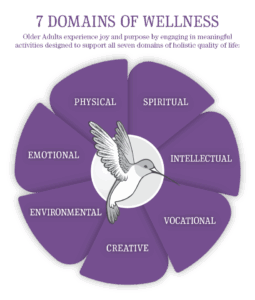
The process of deconstructing a behavioral unmet need begins with reviewing a client’s wellness in each of the Seven Domains of Wellness. Similar to a detective, we examine every aspect of their well-being to identify which domain of wellness appears to be underserved. Based on our analysis, we may “shore up” our interventions or specifically create a new one to complete the total wellness picture. The result is designed to foster meaningful engagement and help mitigate behavioral expressions.
Real-Life Examples of Needs Being Met
We’ve observed numerous situations where understanding the supporting life story, as a best friend would, clarifies the underlying trigger for a behavior. This insight, much like that of a detective, can help transform challenging situations, resulting in an improved quality of care.
For instance, a meticulous homemaker may become upset if her surroundings feel disorganized. Understanding her history allows us to address her need for order and familiarity. Similarly, someone who values their independence might resist help with dressing, emphasizing a need for control and autonomy.
Here are some other examples of behavioral expressions of an unmet need from Sage Care Managers and The Hummingbird Project Engagement Specialists.
Becky: Gaining Purpose and Connection
Becky was a vibrant and social woman who had been very active in her community before her dementia diagnosis. As her condition progressed, she could no longer drive or maintain her usual routines, leaving her feeling somewhat disconnected.
Her caregiver, Robert, noticed how much she lit up when meeting new people and engaging in friendly conversations during their outings. He recognized her warm, giving nature and suggested she and Robert begin volunteering with Meals on Wheels.
The Meals on Wheels volunteer experience quickly became one of Becky’s favorite activities. She took great pride in delivering meals and sharing brief but meaningful moments with the people she served. Volunteering helped meet her need for purpose and connection, clearly supporting her vocational, social, and emotional needs. (Wellness; vocational, social, and emotional needs represent three of the seven holistic quality of life domains. Read more here.)
Maria: Seeking Control and Safety
A woman who became highly distressed during bath time feared falling. Her resistance significantly decreased through gentle, step-by-step guidance, ensuring a non-slip environment, and enabling her to participate as much as possible. The underlying need was safety and control.
Howard: A Restless Wanderer Seeking Movement
A gentleman who constantly paced and tried to leave the house was discovered to be a mail carrier who deeply missed his daily rounds and the physical activity of walking his route. Providing him with a safe opportunity to “deliver” items within the home or garden helped fulfill his need for purpose and movement.
Dan: A Hard Worker Who Needed to be Productive
Dan, a client of The Hummingbird Project, was consistently restless, often perseverating about his savings. He was also occasionally dangerously aggressive, which initially mystified the Hummingbird Engagement Specialist, as the family shared that he had been a jovial and easy-going person throughout his adult life.
Dan’s life story revealed that his sense of worth and financial well-being were deeply tied to his productivity; he had a paper route at a young age, his career involved overseeing complex tasks and organizations, and in retirement, he worked tirelessly at his horse rescue ranch. Dan’s dementia progressed to the point where he felt a lack of clarity about what he was supposed to do each day. He was frustrated that he wasn’t being productive and was worried that he wasn’t earning money if he wasn’t working.
The Engagement Specialist, Kesje, devised a solution: create work for Dan. For example, during a walk in a local park, they came across picnic tables. Keesje asked Dan to outline the logistics for using the picnic area for an office outing.
Kesje encouraged the staff at Dan’s care home to do the same. They started asking him for input on running the care home, sought his ideas for menu planning, and had him water the garden. These jobs helped address boredom and made him feel productive; they also alleviated anxiety about his savings because he felt financially secure when working.
Partnering with You
Family caregivers are the ultimate experts on their loved ones. Their insights into their history, preferences, and typical responses are invaluable. By shifting focus from simply managing “behaviors” to understanding the underlying needs, we can create a more supportive, compassionate, and ultimately more peaceful environment.
At Sage Eldercare Solutions, we are committed to equipping our team members and family caregivers with the knowledge and tools to become a “needs detective.” Understanding the “why” behind the “what,” we can move beyond frustration and towards meaningful connection and care.
Behavior Mapping
Sage has created a Behavior Mapping tracking sheet that can be useful for any care partner, whether a family member or professional. Download this complimentary sheet so that you can map and better understand your loved ones or clients’ behavior. Download Here.
If you want to learn how Sage Eldercare Solutions or The Hummingbird Project can provide expert solutions for someone you know dealing with dementia or any eldercare issue, please schedule a free consultation here.