
Creating the Music Environment: Using Recorded Music to Promote Meaningful Engagement
By Steve Hardy, Hummingbird Project Manager
As a Board-Certified Music Therapist, I recognize the profound impact music has on creating safe, supportive, and stimulating environments for participants, residents, and elders dealing with cognitive challenges. Various therapeutic musical applications such as sing-a-longs, reminiscing/listening activities, movement to music, and attending live concerts and holiday-related events are vital tools in our profession. The ultimate goal is to bring meaning, motivation, and active engagement to the lives of the clients we serve. I hope this article fosters a dialogue and sharing of information among all of us who are committed to improving quality of life for people living with progressive cognitive, physical, and emotional challenges.
The Sensory Environment
When discussing “the sensory environment,” I refer to the ordinary aspects of our surroundings that may go unnoticed but that significantly influence how individuals perceive themselves and their environment. Factors such as lighting, temperature, scents, and background sounds all play a crucial role in creating a sense of security or–on the flip side–potentially leading to confusion and agitation. By carefully manipulating the sound environment through recorded music, we can manage challenging behaviors such as wandering, excessive fatigue, aggression, anxious questioning, and paranoia.
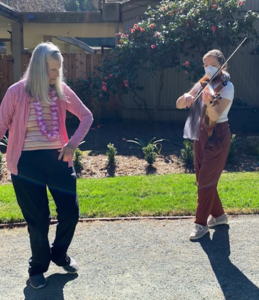
Musical Selections and Their Affective Use
Below is a comprehensive list of musical pieces from the Western classical tradition, categorized by their potential therapeutic impact. It’s crucial for caregivers and therapists to experiment with these selections to find what resonates best with the individual receiving care. Engaging with the music alongside the older adult enhances their experience of the “musical prescription.” Setting aside a special time each day for musical explorations, especially during transition times known to cause agitation or anxiety, can lead to more peaceful and grounding moments for both the caregiver and the elder.
Music to Reduce Stress and Induce Calm
- Bach: Concerto for Two Violins in D Minor (2nd Movement)
- Bach: Arioso from Cantata No. 156
- Bach: Sarabande, Bouree from Violin Partita, No. 1
- Beethoven: Violin Concerto (2nd Movement)
- Beethoven: Piano Concerto No. 5 (2nd Movement)
- Brahms: Symphony No. 3 (2nd Movement)
- Grieg: Holberg Suite, “Air”
- Haydn: Cello Concerto (2nd Movement)
- Mozart: Concerto for Flute & Harp (2nd Movement)
- Mozart: Piano Concerto, No. 21, (2nd Movement)
- Prokofiev: Symphony No. 5 (2nd Movement)
- Schubert: Unfinished Symphony (2nd Movement)
- Tchaikovsky: Symphony No. 6 (2nd Movement)
- Vivaldi: Flute Concertos, Violin Concertos
Music to Create Solitude and Promote Inner Peace
- Bach: Jesu, Joy of Man’s Desiring
- Bach: Cello Concertos
- Bach: Air on a G String
- Barber: Adagio for Strings
- Beethoven: Piano Sonatas
- Beethoven: Piano Concerto No. 5 (2nd Movement)
- Canteloube: Songs of the Auverne
- Chopin: The Medita’ve Chopin by Roy Eaton
- Debussy: Claire de Lune
- Franck: Symphony in D Minor
- Marcello: Oboe Concerto
- Rachmaninoff: Piano Concertos, No. 1 & No. 2
- Vaughn Williams: Fantasia on a Theme by Thomas Tallis
- Vaughn William: Fantasia on Greensleeves
Music to Simulate Mental and Physical Activity
- Bach: Brandenberg Concertos No. 2 & 4 (1st Movement)
- Bach: Concerto for Two Violins in D Minor (1st Movement)
- Beethoven: Symphony No. 3 “Eroica” (4th Movement)
- Beethoven: Piano Concerto No. 5 (1st and/or 3rd Movement)
- Beethoven: Waldenstein Piano Sonata (1st Movement)
- Brahms: Symphony No. 2 (Last Movement)
- Glinka: Overture to Ruslan & Ludmilla
- Haydn: Symphony No. 98 (1st Movement)
- Mendelssohn: Violin Concerto (1st Movement)
- Mendelssohn: Italian Symphony (4th Movement)
- Mozart: Eine kleine Nachtmusik
- Mozart: Piano Concerto No. 21 (1st Movement)
- Rodrigo: Concierto de Aranjuez (1st Movement)
- Smetana: Overture to The Bartered Bride
Music to Augment Celebrations and Provide Reminiscence
- Beethoven: Symphony No. 9 (4th Movement)
- Clarke: The Trumpet Voluntary
- Copland: Billy the Kid
- Gabrieli: Canzoni from Brass Chorus
- Handel: Royal Fireworks Music
- Handel: Messiah, “Hallelujah Chorus”
- Haydn: Trumpet Concerto
- Marais: Fanfare
- Purcell: Tune & Air for Trumpet and Orchestra
- Verdi: Triumphal Scene from Act II of Aida
- Vivaldi: Concerto in C Major for 2 Trumpets
Music to Promote Feelings of Intimacy
- Berlioz: The Love Music from Romeo & Juliet
- Chopin: Etude No. 3
- Chopin: Piano Concertos Nos. 1 and 2 (2nd Movement)
- Lehar: “Villa” from The Merry Widow
- Liszt: Liebestraum
- Mahler: Symphony No. 5 (4th Movement)
- Mozart: Piano Concerto No. 21 (2nd Movement)
- Rachmaninoff: Piano Concerto No. 2 (2nd Movement)
- Tchaikovsky: Romeo & Juliet Overture
- Tchaikovsky: Symphony No. 5 (2nd Movement)
Conclusion
Embarking on this musical journey can transform challenging moments into times of connection and calm. Again, be sure to explore different selections with the elder receiving care to find the best musical prescription for them as a unique individual. Utilizing the power of music, we can create an environment that fosters security and engagement, helping our elders navigate their cognitive challenges with grace and dignity.
About the Author
Steve Hardy, MA, MT-BC, is a Board-Certified Music Therapist with over 20 years of experience in Aging Services in the Bay Area. Steve combined an interest in music/vocal performance with a deep desire to understand human relationships and received degrees in both Psychology and the Expressive Therapies. He is the San Francisco regional manager for The Hummingbird Project.
Photo credit of featured image: Photo Credit: Andrea Piacquadio